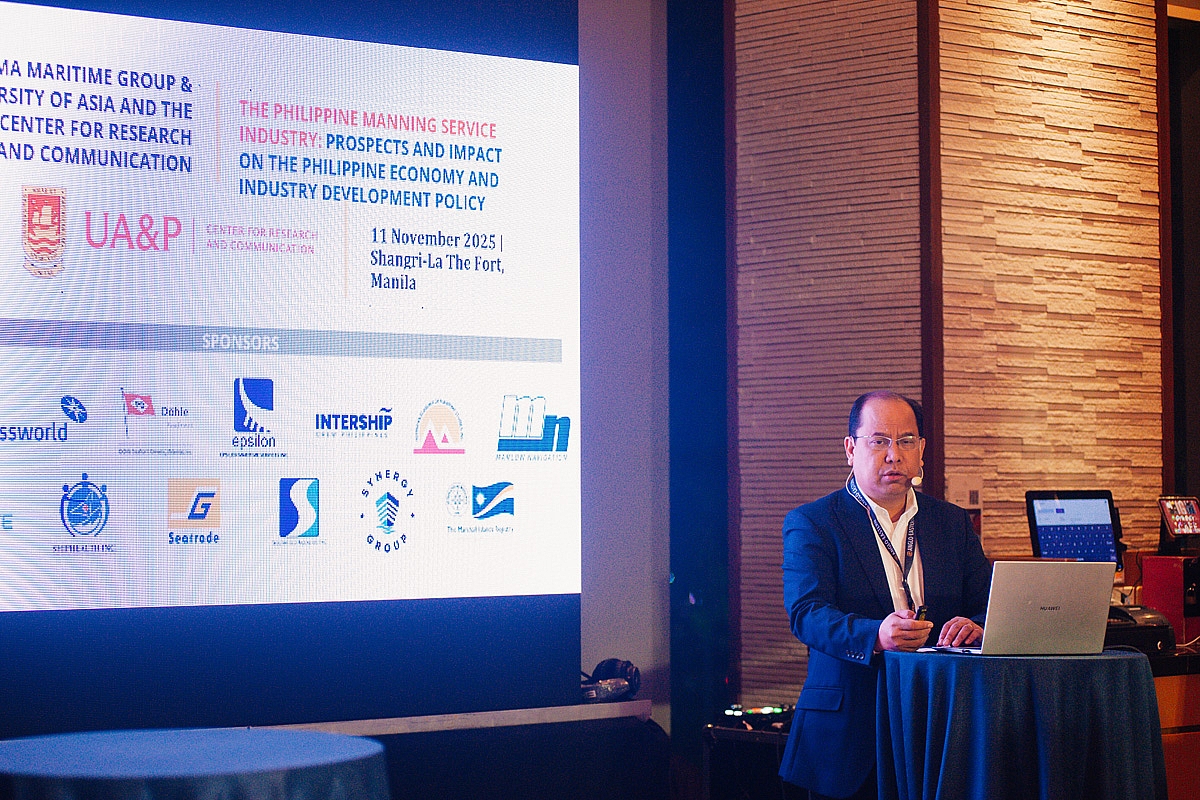
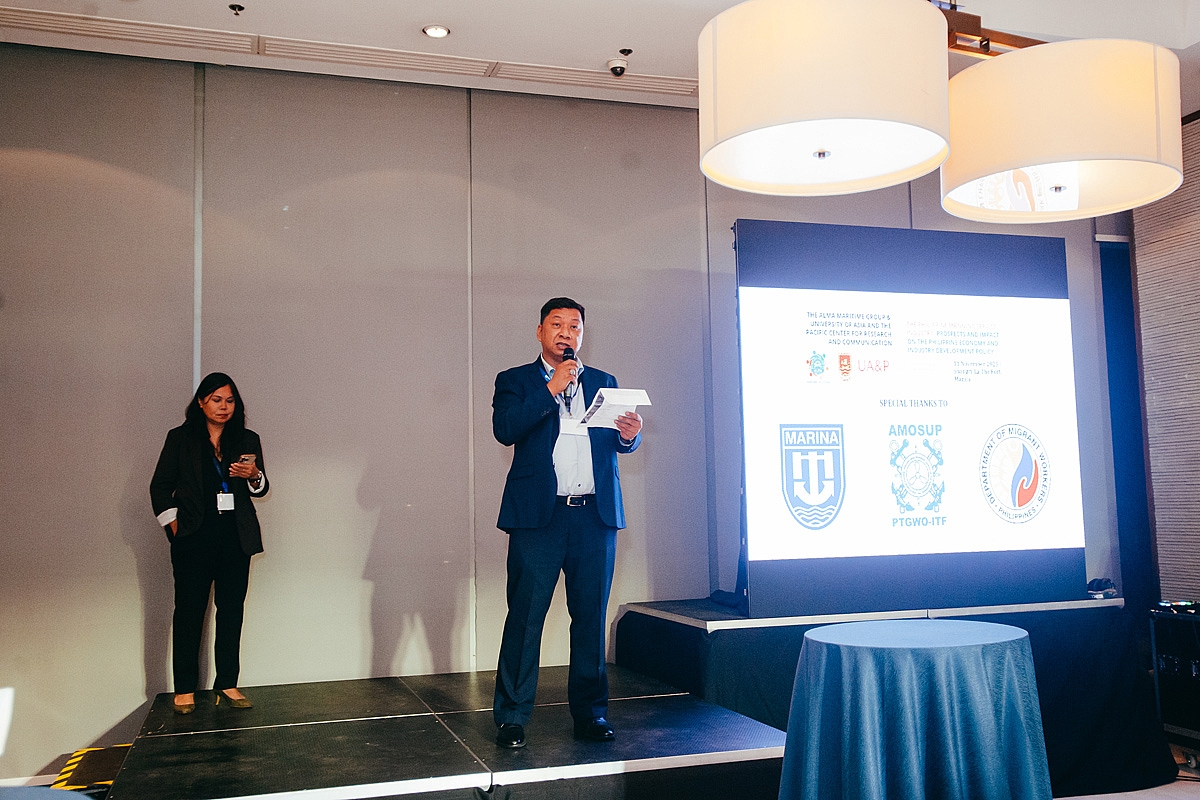
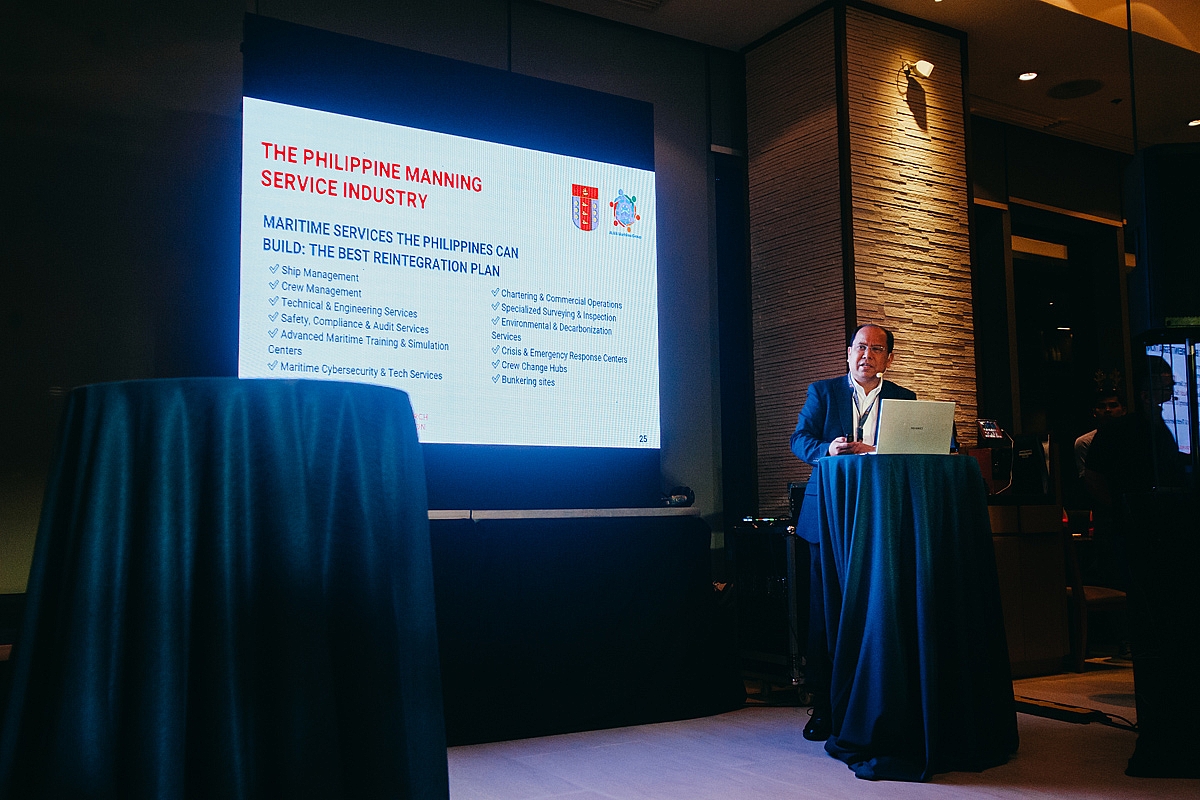
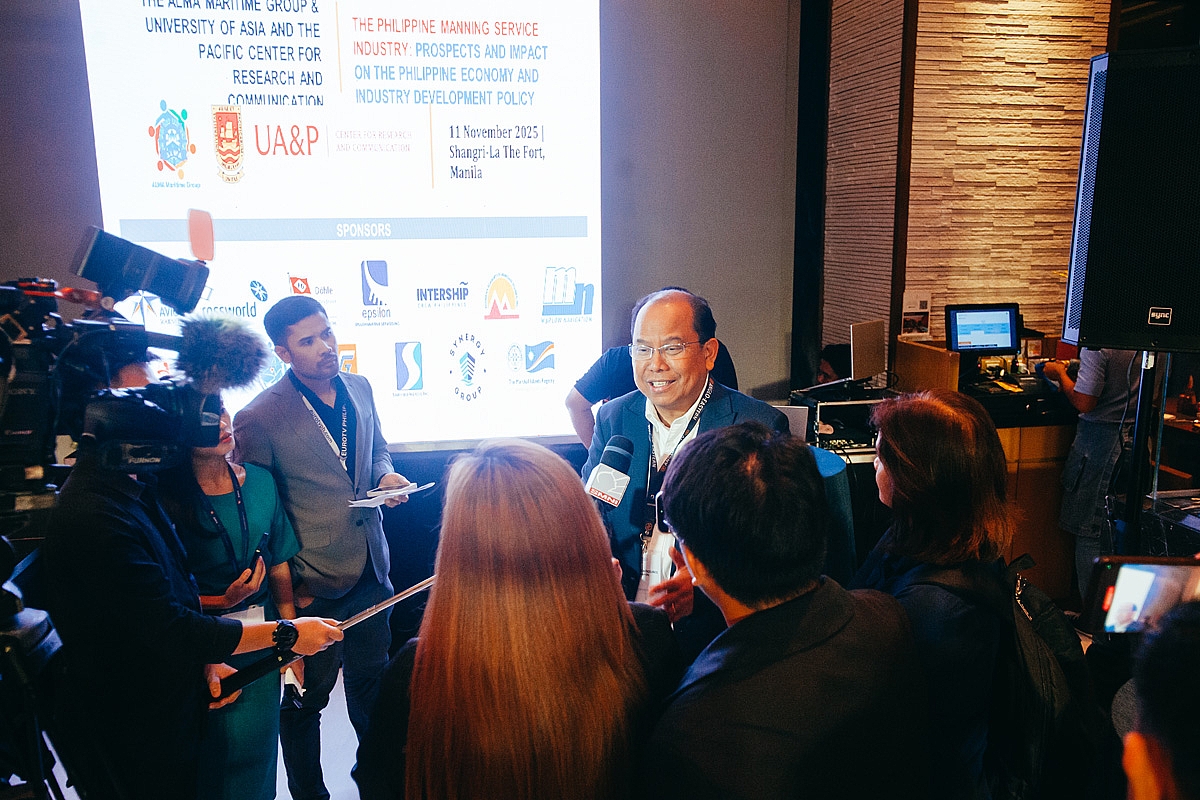
The study underscores the shipping sector’s critical role not only in generating jobs and income, but also in shaping the country’s long-term competitiveness in the global maritime labour market. Marlow Navigation Philippine’s, one of the country’s leading employers with over 10,000 active Filipino seafarers on board, was also present at the launch.
Titled “The Overseas Seafarers’ Industry Profile, Structure, and Impact on the Philippine Economy,” it was commissioned by the Association of Licensed Manning Agencies (ALMA) Maritime Group and conducted by the Center for Research and Communication Foundation, Inc. (CRC).
Supported by the Maritime Industry Authority (MARINA), Department of Migrant Workers (DMW), and Associated Marine Officers’ and Seamen’s Union of the Philippines (AMOSUP), the research moves beyond remittance figures to capture the full multiplier effects of the maritime sector on households, local business and industries, and the broader economy.
Key Findings
The study reveals that the industry supported nearly 400,000 direct and indirect jobs in 2024, accounting for about 0.8% of total national employment. It highlights the significant economic activity generated by foreign shipowners’ and managers’ spending in the country, from training and pre-deployment requirements to accommodation, events, shore-based jobs, social and community initiatives, among other.
Every dollar earned or spent within the industry generates nearly three times its value in wider economic output, according to the study’s multiplier analysis. When these indirect and induced effects are factored in, the seafaring industry’s total contribution is equivalent to roughly 4% of the Philippines’ GDP, which is significant.
The report also reaffirms why Filipino seafarers continue to be preferred globally. Strong labour standards, internationally recognised training facilities and systems, and consistent certification practices have built decades of trust with shipowners and managers around the world.
Competitive Risks
However, the study warns that this leading position is not guaranteed. It examines scenarios in which declining confidence – driven by unpredictable policies, inconsistent or unreasonable and unfair claims processes, or instability in key regulatory reforms, among other – could prompt shipowners and managers to gradually shift to other nationalities.
Such a trend would have far-reaching consequences for employment, foreign exchange inflows, and local industries linked to maritime services, but also to the wider economy and local communities.
Policy Recommendations
To safeguard and strengthen the country’s competitiveness, the study outlines several policy directions for government and industry:
- Introduce incentives and recognition programmes for ethical and high-performing manning agencies.
- Adopt a clear, tiered penalty and enforcement matrix to ensure fairness and consistency.
- Enhance predictability and stability in regulations to maintain investor and employer confidence.
- Protect key Magna Carta provisions, including reforms against ambulance chasing and measures supporting continued compliance with EMSA standards.
These reforms, the study notes, are essential to preserving the trust that has made the Philippines the world’s top source of maritime professionals.
A Call for Coordinated Action
Ultimately, the report provides policymakers, business leaders, and stakeholders with a data-driven roadmap for the future of Philippine seafaring. With global competition intensifying and maritime labour demands evolving, sustained collaboration between government and industry is crucial.
The study makes clear that preserving the country’s maritime leadership requires not only maintaining current strengths, but also committing to stable, predictable, and forward-looking policies.
The study can be downloaded below